More Is More: How Hong Kong's Anime Figure Collectors Are Turning Display Culture Into a Full-On Fashion Philosophy
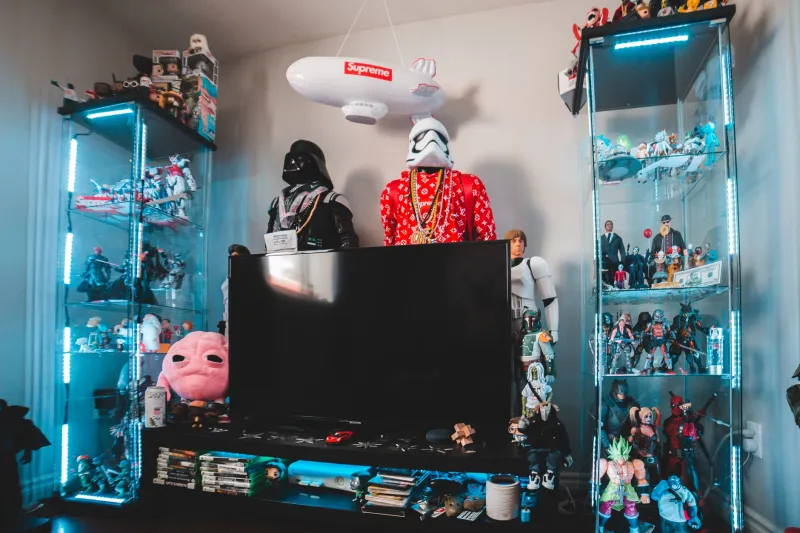
There's a shelf in a Sham Shui Po apartment that would make Marie Kondo quietly excuse herself from the room. Floor-to-ceiling acrylic risers. Nendoroids arranged by color temperature. A full Evangelion lineup lit from below with warm LED strips. And the guy who built it? He'll tell you, without a hint of irony, that this collection is the single biggest influence on how he gets dressed every morning.
This isn't a niche thing. Across Hong Kong, a generation of geek collectors is pushing back hard against the Western minimalism wave — and they're doing it not just with shelves full of figures, but with a fully developed philosophy about what intentional maximalism actually means. The argument isn't "I have too much stuff and I'm okay with it." The argument is sharper than that: purposeful accumulation, when done with real intention, creates richer personal style than aggressive subtraction ever could.
For a US audience raised on capsule wardrobe guides and "less is more" Pinterest boards, that's a genuinely different way of thinking. And it's worth paying attention to.
The Shelf as Style System
Ask any serious figure collector in Hong Kong how they organize their display and you'll get an answer that sounds less like a hobby explanation and more like a design brief. Color blocking. Narrative groupings. Intentional contrast between hard-edged mecha figures and softer chibi styles placed side by side. These aren't random accumulations — they're curated arrangements that follow actual aesthetic logic.
The crossover into fashion happens faster than you'd expect. Collectors who spend hours thinking about how a matte grey Gundam unit reads next to a glossy pastel Re:Zero figure start applying that same visual grammar to their outfits. Texture contrast. Scale. The way one dominant color anchor pulls a whole composition together. The shelf becomes a laboratory. The wardrobe becomes the output.
"I don't use Pinterest or Instagram for outfit inspo," one collector based in Mongkok explained. "I look at my shelf. If I've been building a display that's all deep navy, burgundy, and gold accents, that's probably what I'm reaching for when I get dressed."
That feedback loop — collection influencing wardrobe influencing collection — is at the heart of what makes Hong Kong's display culture so distinct from Western collector habits, which tend to treat figures as separate from "real life" interests like fashion.
Why Minimalism Misses the Point
The Marie Kondo method hit American households like a cultural reset button. Suddenly, owning fewer things was the aspirational goal. Capsule wardrobes. Neutral palettes. Thirty-item closets. The whole framework was built around reduction as virtue.
Hong Kong's geek community didn't exactly reject that framework — they just found it irrelevant to how they actually live and dress. In a city where apartments are famously compact and storage is a genuine daily puzzle, the idea that you'd solve a space problem by simply owning less has always felt a little naive. The real skill isn't subtraction. It's organization with intention.
That distinction matters enormously when you translate it to fashion. A collector who has spent years developing systems for displaying 200 figures in a 40-square-foot shelf space isn't thinking about owning less — they're thinking about how every single item earns its place through deliberate arrangement. Applied to a wardrobe, that means nothing gets in that doesn't serve a specific aesthetic function. Maximalism, yes. But maximalism with rules.
The result is often a personal style that reads as genuinely complex and considered — layered graphic tees under open overshirts, accessory stacks that reference specific fandoms without screaming them, colorways pulled directly from a favorite figure's palette. It's maximalism that has done the homework.
The Mood Board You Can Actually Touch
One of the most interesting things about Hong Kong's figure display culture is how tactile the whole process is. Unlike a digital mood board or a saved Instagram folder, a physical shelf of figures is something you interact with every day. You move things around. You notice when something feels off. You develop a genuine sensitivity to composition over time.
Collectors talk about this in terms that sound almost meditative. The act of rearranging a display — shifting a figure two inches left, swapping the background panel, replacing a standing pose with a dynamic action figure to change the energy of a grouping — is described as a way of recalibrating aesthetic instincts. It keeps the eye sharp.
For fashion purposes, that sharpness translates directly. Collectors who regularly engage with their displays tend to be unusually good at spotting when an outfit is almost right but not quite — when the proportions are slightly off, when a color is doing too much work, when the overall composition needs one more element or one less. They've trained themselves to see that way.
American geeks who've caught onto this are starting to treat their own figure collections less like display pieces and more like active creative tools. Not just something to look at, but something to think with.
Building a Collection That Actually Informs Your Closet
If you want to experiment with this approach, the entry point is simpler than it sounds. Start by looking at your existing collection — figures, statues, whatever you've got — and ask yourself what aesthetic logic is already there, even if you didn't consciously build it. Chances are you've been gravitating toward a consistent color story or a recurring visual theme without realizing it.
Then look at your wardrobe with that same lens. Are there patterns? Disconnects? Places where your collection and your closet are speaking completely different visual languages?
Hong Kong collectors would tell you that the goal isn't to dress as your figures — it's to dress from the same sensibility that drew you to them in the first place. The figures are evidence of your taste. Your wardrobe should be, too.
The shelf isn't clutter. It's a map.
The Bigger Shift
What's happening in Hong Kong's collector community is part of a broader cultural pushback against the idea that minimalism is the only mature, sophisticated approach to personal style. Intentional maximalism — whether it shows up as a wall of figures, a layered streetwear fit, or an accessory stack heavy with fandom references — is increasingly being recognized as its own form of discipline.
It takes real skill to curate rather than just accumulate. It takes a developed eye to make complexity feel purposeful rather than chaotic. And it takes genuine self-knowledge to build a collection, or a wardrobe, that actually reflects who you are rather than who you think you're supposed to be.
Marie Kondo asked whether things spark joy. Hong Kong's geek collectors are asking a harder question: does this earn its place in the larger story I'm telling? That's a more demanding standard. And the style that comes out of it tends to be a lot more interesting.