Glow Up: How Hong Kong's Vanishing Neon Signs Are Fueling a DIY Accessories Movement in the US
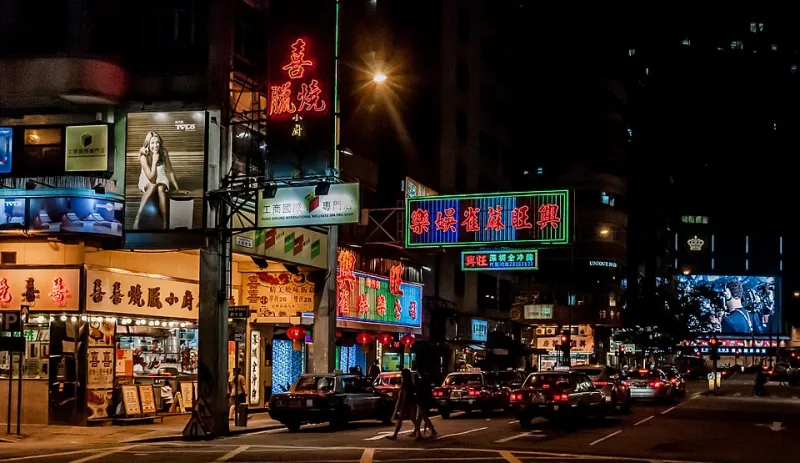
Photo: Wilfredor, CC0, via Wikimedia Commons
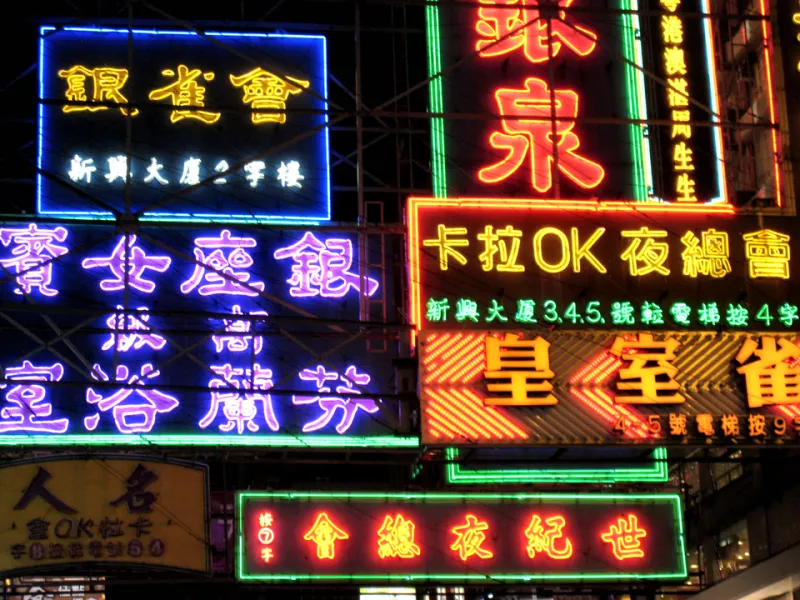
There's a specific kind of grief that hits when a place you've only ever seen in photos starts to disappear. For a growing wave of American geeks, that grief is tied to the neon-drenched storefronts of Hong Kong—the buzzing tubes of magenta and jade green that once floated above electronics shops in Sham Shui Po, the flickering kanji stacked six stories high in Mong Kok, the hand-bent cursive glowing over a video game parlor that probably hasn't changed its menu since 1994. These signs weren't just wayfinding. They were atmosphere. And they're going dark faster than anyone expected.
But here's the thing about a dying aesthetic: it tends to spark a creative countermovement almost immediately. Right now, a loose network of independent makers, zine publishers, and accessory designers across the US is doing something quietly remarkable—they're translating Hong Kong's fading neon culture into wearable objects. Patches. Enamel pins. Embroidered keychains. Bag charms that look like miniature light boxes. And the community eating it up? It's almost entirely geek-adjacent.
Why Neon, Why Now
To understand the appeal, you have to understand what Hong Kong neon actually meant. By the 1970s and 80s, the city had one of the densest concentrations of neon signage anywhere on Earth. Walk down almost any commercial street in Kowloon and the signs would overlap overhead like competing radio frequencies, each one screaming for attention in a different color and font. Electronics shops, mahjong parlors, video rental stores, and early game centers all used neon as their primary visual identity. It was chaotic and beautiful and completely analog in the most maximalist way imaginable.
Then came LED retrofits. Then came stricter safety regulations. Then came the slow economic shifts that shuttered the small family-run shops that had kept those signs burning. The Hong Kong neon industry—once employing thousands of skilled craftspeople who bent glass tubes by hand—has shrunk to a fraction of its former size. Preservation groups like the M+ museum and independent archivists have been racing to document and rescue what remains, but the street-level glow is largely gone.
For American geeks who grew up consuming Hong Kong's visual culture through kung fu films, early video game imports, cyberpunk novels, and anime set in fictionalized versions of the city, this feels personal. The neon wasn't just decoration—it was the texture of a fantasy that shaped an entire generation's aesthetic sensibility.
The Makers Keeping the Light On
Enter the patch-and-pin underground. Across Etsy shops, Instagram storefronts, and small-batch Kickstarters, independent makers are channeling that neon legacy into accessories that fit on a backpack strap or a denim jacket lapel.
The design language is immediately recognizable to anyone who's spent time in Hong Kong or obsessively watched Wong Kar-wai films on a laptop at 2 a.m. Chunky block characters in hot pink on black backgrounds. Stylized shop-front silhouettes with exaggerated vertical sign columns. Color palettes that lean hard into electric teal, saturated red, and that specific warm amber that old neon tubes develop as they age. Some makers are working from archival photographs; others are collaborating with Hong Kong diaspora communities to source reference images from family albums and neighborhood documentation projects.
One recurring theme in these designs is the electronics shop. Sham Shui Po—Hong Kong's legendary electronics district—had a particularly dense cluster of neon that advertised everything from radio components to early gaming hardware. For geeks, that imagery carries a double charge: it's both visually striking and culturally loaded with the nostalgia of a pre-internet tech culture that feels genuinely alien to younger generations.
From Preservation to Personal Style
What makes this movement interesting from a fashion perspective is how it sits at the intersection of activism and aesthetics. Several of the makers involved are explicit about their connection to Hong Kong neon preservation efforts. Some donate a portion of proceeds to archival organizations. Others work directly with documentation projects to ensure their designs are historically grounded rather than just vibes-based appropriation.
That intentionality matters to the buyers, too. The US geek community has gotten increasingly savvy about the difference between genuine cultural engagement and surface-level trend-chasing. When someone slaps a neon-inspired patch on their tote bag, they often want to be able to tell the story behind it—where the original sign was, what kind of shop it marked, why it's gone now. The accessory becomes a conversation starter and a small act of remembrance simultaneously.
This is very much in line with how geek culture has always operated around obscure references and deep cuts. The neon patch on your backpack functions like a band tee for a group that never charted—it signals membership in a community of people who paid attention.
How to Build the Look
If you want to incorporate this aesthetic into your own setup without it reading as a costume, the key is restraint and context. A single well-chosen neon-inspired patch on a plain canvas tote hits differently than a jacket completely covered in them. Let the piece breathe. The original signs worked partly because of the darkness around them—negative space was what made the glow pop.
Color coordination matters more than you'd think. The Hong Kong neon palette is specific: it's not the pastel neon of 80s American aesthetics. It's deeper, more saturated, and often set against very dark backgrounds. Pair accessories in this range with black, deep navy, or charcoal base pieces and they'll read as intentional rather than chaotic.
Bag placement is having a moment in geek streetwear right now anyway—the heavily accessorized backpack or crossbody is basically a moving mood board. Mixing a neon-inspired enamel pin with a vintage tech sticker and a small embroidered keychain from an indie maker creates a layered visual language that feels genuinely personal.
The Bigger Picture
There's something poetic about the fact that a city's disappearing analog infrastructure is being preserved, in part, through the obsessive craft energy of American geeks who've never set foot in Hong Kong. It speaks to how thoroughly that city's visual culture has traveled—through film, through gaming, through the internet's long memory—and how deeply it's embedded itself in the imagination of people who grew up on the other side of the world.
The neon is going dark on the streets. But it's lighting up jacket backs and bag straps and convention lanyards from Brooklyn to Portland to Austin. That's not a bad afterlife for a glass tube bent by hand in a workshop that probably doesn't exist anymore.
Keep your eyes on the small makers. The best stuff in this space isn't coming from big accessory brands—it's coming from the people who care enough to do the research, credit the source, and put that care into every stitch.