When the Filter Becomes the Fit: How Hong Kong's Digital Beauty Trends Are Rewriting Geek Fashion IRL
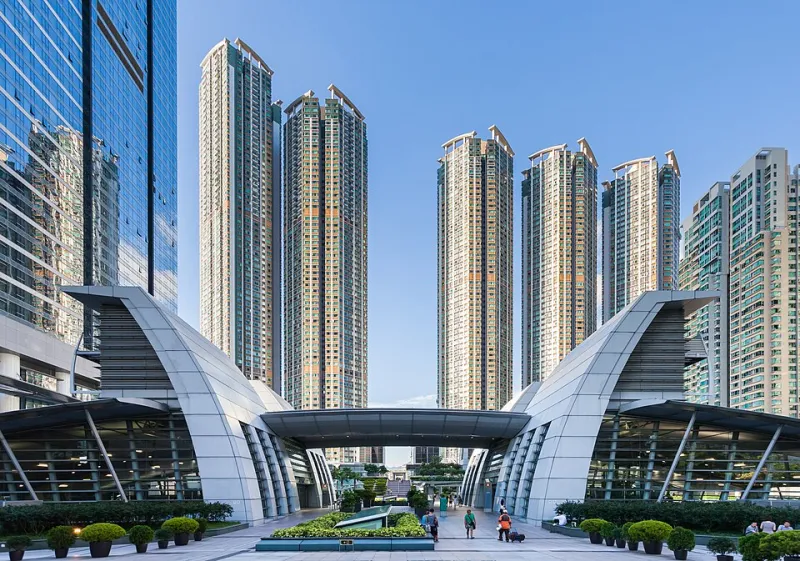
Photo: John Benson from Madison WI, CC BY 2.0, via Wikimedia Commons
Opinion: the most underrated force shaping geek fashion right now isn't a designer, a convention, or even a viral streetwear drop. It's a filter. Specifically, it's the sprawling ecosystem of beauty and aesthetic filters that Hong Kong creators are building and sharing across TikTok and Douyin — and the way those filters are quietly dictating what people actually put on their bodies in the real world.
This isn't a story about filters making people look different online. It's about something more interesting and honestly a little more complicated: the way a digital aesthetic experience is functioning as a mood board, a color consultant, and a style brief all at once, and how that pipeline is influencing geek fashion communities on both sides of the Pacific.
The Filter-to-Wardrobe Pipeline Is Real
Let's establish what's actually happening here, because the mechanism is specific. Hong Kong creators — particularly those operating at the intersection of beauty, gaming, and anime fandom — have developed a genuinely distinct filter aesthetic. We're talking about overlays that lean into soft iridescence, chromatic aberration effects, subtle color grading that pushes skin tones slightly cooler or warmer, and AR elements that place characters or UI graphics into the frame. These aren't just beautifying tools. They're world-building tools.
When a creator films a get-ready-with-me video using a filter that bathes everything in a cool lavender-tinted glow with a slight vaporwave color grade, they're not just making themselves look good — they're establishing a complete visual language. And viewers, consciously or not, absorb that language. They start to associate that color palette with a feeling, an identity, a community they want to be part of. Then they go shopping.
This is where it gets tangible. The specific color coordination choices you're seeing dominate geek fashion communities right now — the pairing of muted sage green with deep violet, the comeback of iridescent fabrics, the sudden ubiquity of color-tinted clear accessories — these aren't emerging from nowhere. Trace them back and you'll find they're consistent with the color grading choices that Hong Kong's most-followed beauty and geek content creators have been baking into their filter aesthetics for the past eighteen months or so.
HK's Unique Position in the Filter Ecosystem
Hong Kong occupies a genuinely interesting position in the global filter economy. It sits at the cultural intersection of Douyin's massive Chinese-language creator ecosystem and TikTok's English-language global reach, which means HK creators are often bilingual in both platforms and both aesthetics. They're pulling references from mainland Chinese digital beauty culture — which has its own incredibly sophisticated filter and editing tradition — and remixing them with the anime, gaming, and streetwear references that are core to Hong Kong's geek scene.
The result is a filter aesthetic that feels distinct from both its source cultures. It's more maximalist than the clean, high-key-lit aesthetic that dominates a lot of Western beauty TikTok, but it's also more grounded in wearable fashion references than some of the more fantastical mainland Douyin aesthetics. HK geek filter culture has this quality of looking simultaneously like a video game cutscene and like something you could actually wear to a night market. That dual-register quality is exactly what makes it so influential for real-world fashion.
What the Filters Are Actually Telling People to Wear
Okay, let's get specific, because the trend lines are pretty clear if you know where to look.
Iridescent and holographic textures are having a genuine moment in geek fashion communities, and it maps directly to the iridescent overlays that have been standard in HK beauty filters for a while now. When you spend hours watching content where everything has a slight holographic sheen, you start wanting that in your physical space. Holographic vinyl accessories, iridescent crossbody bags, reflective patches on otherwise understated outfits — these are all showing up with increased frequency.
Color-coordinated accessory stacking is another one. HK beauty filters often create a cohesive color temperature across the entire frame, which trains the eye to expect accessories, makeup, and clothing to share a tonal family. That's showing up in how geek fashion communities are styling themselves IRL — more intentional color matching between bag, shoe, and graphic tee accent colors than you'd typically see in streetwear, which has historically been more about clashing and contrast.
UI-inspired graphics and text elements on clothing are also partially filter-driven. When creators use AR filters that overlay game UI elements onto their videos — health bars, chat windows, system prompts — and those videos rack up millions of views, it creates demand for clothing that replicates that aesthetic in physical form. Brands have noticed. You're seeing more HUD-style graphics on tees and hoodies from indie geek fashion labels that are clearly responding to this digital-to-physical translation.
The Authenticity Question
Here's where I have to be honest about the tension in all of this, because it's real and it matters for how we think about these trends landing in the US.
Filter-driven fashion has an authenticity problem that's worth sitting with. When a style choice originates in a digital effect rather than in a lived cultural practice or a specific community's aesthetic evolution, it can end up feeling hollow when it arrives in physical form. The iridescent bag that looks incredible in a color-graded TikTok might just look like a cheap party supply item in normal lighting. The UI-graphic tee that reads as sharp and referential in a filter-enhanced video might just look like clip art on cotton in a fitting room.
There's also a compression issue. Filters flatten and simplify complex aesthetic systems. Hong Kong's geek fashion scene has real depth — it draws on decades of local streetwear history, specific subcultural references, the particular visual vocabulary of Cantonese pop culture. When a filter distills that into a color palette and a couple of AR overlays, and that filter becomes the primary way US consumers encounter HK geek aesthetics, something gets lost. You end up with people chasing a vibe rather than understanding a culture.
That said, I don't think the answer is dismissing filter-driven trends as inauthentic by definition. Filters are a legitimate part of digital culture, and the aesthetics they popularize are real aesthetic preferences being expressed by real people. The question is whether the translation from digital to physical is thoughtful or just reactive.
What This Means for US Geek Fashion Consumers
For American geek fashion consumers engaging with HK-influenced aesthetics, the filter pipeline is probably already affecting your shopping choices whether you realize it or not. The color palettes you're drawn to, the accessory textures you're seeking out, the graphic styles you find compelling — a meaningful chunk of that is being shaped by content you've consumed that was itself shaped by Hong Kong's filter culture.
The move, I think, is to use that as a starting point rather than an endpoint. Let the filter aesthetic point you toward HK geek culture, then go deeper. Find the actual designers, the actual communities, the actual cultural references that the filters are drawing from. That's where the longevity is. Trends that are purely filter-driven tend to cycle fast — once the filter aesthetic shifts, the fashion associated with it can feel dated almost overnight.
But if you've used that filter as a gateway to understanding something real about Hong Kong's geek fashion scene? That stays with you. And that's the kind of influence that actually changes how someone dresses, long after the filter has been replaced by the next one.