Tiny Characters, Big Statements: How Hong Kong's Keychain Culture Is Beating Designer Logos at Their Own Game
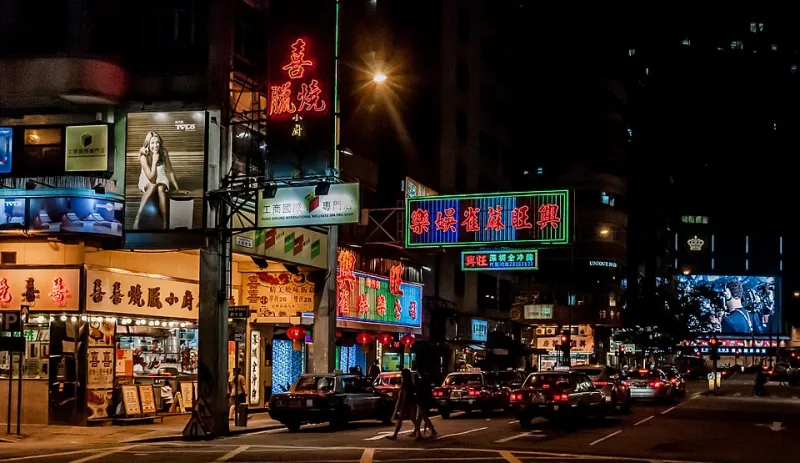
Walk through Mong Kok on any given Saturday and you'll notice something dangling from nearly every backpack, tote, and crossbody in sight. Not a monogram. Not a logo patch. A constellation of tiny figures — Sanrio characters, Studio Ghibli creatures, limited-run blind box pulls, handmade resin charms shaped like bowls of ramen or miniature mahjong tiles. In Hong Kong, what hangs off your bag isn't an afterthought. It's an autobiography.
And increasingly, that autobiography is being written in cities far from Hong Kong's neon-lit streets.
The Charm Wall vs. The Logo Wall
Let's be honest about what designer logos actually communicate. A Louis Vuitton monogram, a Gucci GG, a Supreme box — these are shorthand for I spent money here. That's the whole message. The brand does the talking, and you're basically the billboard.
Hong Kong's keychain culture operates on a completely different frequency. When someone's bag is loaded with a Totoro plush clip, a holographic Pikachu acrylic charm, a tiny brass charm shaped like a Hong Kong tram, and a blind box figure from a local artist's debut drop, they're not broadcasting a price point. They're broadcasting a personality. You're not reading a label — you're reading a person.
"It's like someone handing you their entire interest graph in physical form," says Dani Reyes, a 26-year-old graphic designer based in Austin who started building her own charm collection after spotting Hong Kong street style content on TikTok. "With a designer bag, I know you have money or you want me to think you do. With a charm setup like the ones I was seeing from HK, I know you love Howl's Moving Castle, you collect Labubu figures, and you probably care about indie artists. That's so much more interesting."
The Psychology of the Cluster
There's something almost defiant about filling your bag with a dozen tiny things that cost five to twenty dollars each instead of one thing that costs five hundred. It's a rejection of the scarcity model that luxury fashion runs on — the idea that exclusivity equals value, and that owning fewer, more expensive things is inherently more sophisticated than owning many joyful, specific ones.
In Hong Kong, the aesthetic logic has always been a little different. The city has a deep relationship with collectibility — from the trading card culture that predates Pokémon to the blind box fever that turned brands like Pop Mart into genuine phenomena. Collecting isn't seen as juvenile or low-status. It's a skill. Knowing which artist dropped a limited charm set at which convention, tracking down a regional-exclusive figure, finding the perfect vintage Doraemon clip at a Temple Street stall — these require knowledge, patience, and community connections. That's a different kind of cultural capital, and it's one that geek communities in the US are starting to recognize as legitimate.
"There's a gatekeeping problem in a lot of collector spaces," says Marcus Tran, a 31-year-old in Seattle who runs a Discord server for anime merchandise collectors. "But the charm thing feels genuinely anti-gatekeeping. Nobody can tell you your charm collection is wrong. There's no hierarchy. You like what you like and you hang it on your bag and that's the whole vibe."
How It Translates Stateside
The US version of this trend is showing up in some predictable and some surprising places. Convention culture — Comic-Con, Anime Expo, PAX — has always had a pin and lanyard economy, but the shift toward charms feels more personal than a panel pin or a freebie button. People are curating looks for their bags the way they curate outfits, layering acrylic standees with plush clips and washi tape-wrapped keychain holders.
Etsy has seen a massive surge in handmade charm shops run by independent artists leaning into exactly this aesthetic. A lot of them are directly influenced by the Hong Kong and broader East Asian character merchandise market — bright colors, chibi proportions, that specific kind of maximalist sweetness that doesn't apologize for itself.
TikTok's "bag charm check" trend has also done a lot of heavy lifting here. Videos where creators pan across their charm clusters, explaining the story behind each one, regularly rack up hundreds of thousands of views. It's essentially a personality reveal in accessory form, and the format rewards specificity. The more niche the reference, the more it resonates with the exact right audience.
The Anti-Flex Flex
Here's the interesting tension at the center of all this: charm culture is technically still a flex. People are still showing off. But what they're showing off has shifted from what I can afford to what I actually love. That's a meaningful distinction.
In a fashion landscape that's been dominated for decades by the logic of aspirational branding — buy this thing to signal membership in this class of people — there's something genuinely refreshing about a trend that inverts the whole premise. Your Spirited Away bathhouse charm didn't cost $40. Your local artist's resin mushroom figure was $12 at a pop-up. Your Hong Kong tram enamel pin came from a market stall. None of it is performing wealth. All of it is performing you.
And for a generation of US geeks who grew up being told that their interests weren't "cool" enough for mainstream fashion spaces, that shift hits different.
"I spent years trying to find ways to dress that didn't make me feel like I was hiding who I was," Dani says. "The charm thing is the first time I've felt like my bag is actually mine. Like, completely, specifically mine."
Building Your Own Cluster
If you're ready to get into it, the entry points are genuinely accessible. Pop Mart has US retail locations and a robust online store for blind box pulls. Etsy is stacked with independent charm makers doing incredible work in acrylic, resin, and enamel. If you can get to a convention, the artist alley is always your best bet for finding pieces that nobody else will have.
And if you want to go full Hong Kong with it? Track down some of the smaller independent shops that export from HK directly — platforms like Carousell sometimes have sellers shipping internationally, and the character merchandise ecosystem there pulls from a wider range of IPs than you'll typically find stateside.
The only real rule is that there are no rules. Stack as many as you want. Mix the precious with the playful. Let your bag become the most honest thing you're wearing.
Because in the end, a bag full of things you genuinely love will always say more about you than a logo ever could.