Clear the Clutter, Keep the Chi: How Feng Shui Thinking Is Reshaping the Minimalist Geek Wardrobe

Photo: minimalist sneaker collection display shelves Hong Kong apartment aesthetic, via www.asweetpeachef.com
Walk into any serious sneakerhead's apartment in Hong Kong's Mid-Levels neighborhood and you'll notice something immediately: nothing is accidental. The kicks aren't just stacked because there's no room — they're placed. A limited Jordan colorway sits at eye level, commanding the room's energy. A pair of beat-up Onitsuka Tigers rests lower, grounded and humble. There's breathing room between each box. The whole setup feels less like storage and more like architecture.
That's feng shui at work, and increasingly, it's not just for living rooms anymore.
Across the US, a growing wave of geek-adjacent style enthusiasts — collectors, cosplayers, streetwear devotees — are pulling from Hong Kong's deep-rooted spatial design philosophy to rethink not just how they display their stuff, but how they dress. The principle is simple but surprisingly radical when applied to fashion: every object, every garment, every accessory carries energy. And when things are arranged with intention — balanced, flowing, unobstructed — that energy works for you instead of against you.
What Feng Shui Actually Means (Outside the Crystal Shop)
Let's clear something up first. Feng shui gets a bad rap in Western pop culture — it's usually reduced to "put a plant in the corner" or "don't sleep with your feet facing the door." But in Hong Kong, where the practice genuinely influences everything from skyscraper architecture to apartment floor plans, it's treated as a serious design framework built around the flow of qi (life force energy), the balance of opposing forces, and the principle that intentional spatial arrangement creates harmony in every dimension of life.
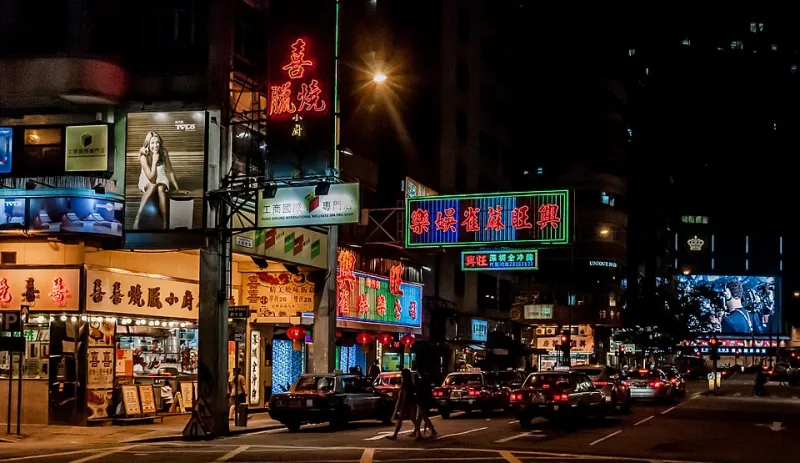
Hong Kong developers literally consult feng shui masters before breaking ground. HSBC's famous headquarters building famously features a design that channels energy through its open ground floor. The city's geography — mountains at the back, water at the front — is considered near-perfect feng shui by classical standards.
So when Hong Kong's street-style community started applying these same spatial instincts to fashion, it wasn't a quirky experiment. It was a natural extension of a worldview they'd grown up living inside.
The Wardrobe as a Living System
Here's where it gets interesting for US geek culture specifically. Think about how most collectors and enthusiasts currently organize their wardrobes: by fandom, by drop date, by color if they're feeling ambitious. It's categorization, not curation. The difference matters.
Feng shui-influenced dressing treats the wardrobe as a living system with its own energy map. Heavy, dark pieces — think oversized tactical jackets, chunky cargo pants, dense graphic hoodies — carry yin energy: grounding, weighty, still. Lighter pieces — a washed-out pastel anime tee, a linen overshirt, a barely-there mesh layer — carry yang: active, upward, expansive. The art is in knowing how to balance both so your outfit doesn't feel like it's fighting itself.
This isn't just aesthetic theory. A lot of geek-forward fits fail not because the individual pieces are wrong, but because the energy distribution is off. Three heavy statement pieces stacked on top of each other creates visual — and energetic — congestion. The outfit has nowhere to breathe. Feng shui thinking says: give your fit a clear focal point, let the supporting pieces recede, and leave intentional negative space.
That negative space? In streetwear terms, it might mean one clean, unprinted sleeve against a loud graphic chest. Or a plain white tee acting as a visual rest stop between a maximalist jacket and a patterned pant. The blank space isn't empty — it's working.
Sneaker Displays, Manga Shelves, and the Peripheral Problem
Outside the closet, the feng shui-wardrobe connection gets even more tangible for collectors. How you display your collection shapes how you feel about what you own — and by extension, what you reach for when you get dressed.
Hong Kong collectors have long understood that a crowded shelf creates mental noise. When every limited-edition figure, every manga volume, every gaming peripheral is crammed together with zero visual hierarchy, the collection stops feeling like a curation and starts feeling like a pile. The pieces lose their individual weight.
The fix, feng shui-style, is purposeful spacing and intentional grouping. On a sneaker wall, that means building in breathing room between pairs rather than packing them edge to edge. It means placing your most meaningful pieces at natural eye level — the energetic "command position" — and letting less charged items anchor the lower shelves. On a manga display, it might mean clustering volumes by arc or emotional tone rather than just publication order, so the shelf tells a story with its own rhythm.
For US collectors who've started thinking this way, the side effect has been unexpected: they buy less. When you're arranging with intention, you feel the moment a new acquisition disrupts the flow rather than adding to it. That sneaker you were hyped on suddenly doesn't make sense in the ecosystem you've built. The philosophy creates its own natural edit.
Building a Feng Shui-Aligned Geek Fit, Practically Speaking
So how do you actually apply this to getting dressed in the morning without spending an hour meditating on your closet? A few working principles that Hong Kong street-style folks lean on:
Anchor, then build. Choose one piece that carries the most energy — your statement sneaker, your hero graphic, your standout outerwear — and build outward from there. Every other piece should support that anchor, not compete with it.
Balance the weight. If your top half is doing the heavy lifting (bold print, layered pieces, structured silhouette), let the bottom half breathe. Tapered basics, neutral tones, clean lines. And vice versa.
Respect the negative space. Not every surface needs a pattern. Not every layer needs a logo. The plain moments in an outfit are what make the loud moments land.
Let pieces rest. This one's more about the collection than the daily fit — but if a piece hasn't felt right lately, give it shelf space instead of closet space. Let it exist in your visual field without pressure. Sometimes the energy shifts.
Edit seasonally, not just practically. Feng shui practitioners clear and reset spaces with the seasons. Do the same with your wardrobe. Not just pulling out the winter coats, but genuinely asking what still carries energy and what's just taking up space.
Why This Resonates Right Now
There's a reason this particular Hong Kong design philosophy is landing so hard in American geek fashion circles at this exact moment. After years of hyperconsumption — every drop, every collab, every limited run — a lot of collectors are sitting inside closets and shelves that feel more overwhelming than inspiring. The stuff that was supposed to express identity has started to obscure it.
Feng shui thinking offers a framework that isn't about minimalism for minimalism's sake — it doesn't ask you to get rid of your collection or wear only neutrals. It just asks you to be intentional. To understand that space and flow are design elements, not failures of acquisition.
Hong Kong figured that out centuries ago. Its streets, its architecture, its style scene all carry that understanding in their bones. And right now, American geek culture is just starting to catch up.
Your wardrobe has energy. The question is whether you're directing it or just accumulating it.