The Ding Ding Doctrine: Why Hong Kong's Trams Make Better Geek Outfits Than Drop Culture
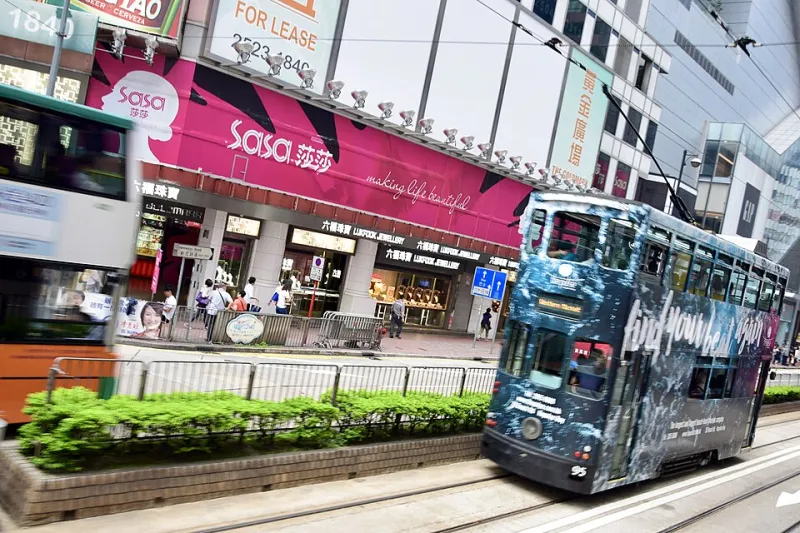
Photo: Ank Kumar, CC BY-SA 4.0, via Wikimedia Commons
Hong Kong's double-decker trams are not fast. They creak, they sway, and they announce themselves with a cheerful ding that sounds like a notification from another era. That is exactly why they matter to fashion right now. In a streetwear cycle built on instant drops, sold-out carts, and algorithmic urgency, the tram is a rolling argument for slow style. For American geeks who have spent years chasing the next capsule, the ding ding offers a different kind of flex: a wardrobe with a pace, a palette, and a point of view.
At HK Fashion Geek, we keep coming back to the same idea. Geek style is not only about what you reference. It is about how you collect, remix, and live with those references. The tram makes that idea visible. It is public transport as a mood board, and it has been quietly training Hong Kong eyes for decades.
The Anti-Drop Model
A tram does not reinvent itself every season. It runs the same route, in the same shape, with the same basic colors, and somehow it still feels alive. That is the opposite of drop culture. Drop culture says the old thing is dead because the new thing just landed. The ding ding says the old thing is useful because it still gets you where you need to go.
For geeks, this is a useful correction. So many of us are archivists at heart. We keep old games, old comics, old figures, old keyboards, old posters. But our closets often follow the opposite logic: buy the new hoodie, the new collab, the new limited tee, then wonder why nothing feels like a personal collection. The tram mindset pushes you toward pieces that can age. A heavy cotton tee with a slightly off-register print. A work jacket in a color that fades well. A cap with a small embroidered mark instead of a giant logo. These are not flashy purchases. They are repeatable ones.
A Palette Pulled From Rolling Metal
The tram gives you a color story that is unusually easy to wear. Think deep British racing green, warm cream, faded red, dark maroon, and the dull silver of handrails. Add the soft yellow of old interior lighting and the chalky white of route numbers. It is a palette with contrast, but not chaos. The green and cream do the heavy lifting. The red gives it a pulse. The metal tones keep it grounded.
That combination works for American geek wardrobes because it is familiar without being boring. It sits close to workwear, close to vintage sportswear, and close to the kind of muted utility pieces that already live in many closets. You do not need a full costume. Start with a cream tee under a green overshirt. Add faded red socks or a maroon cap. Use silver hardware on a bag or a belt. The goal is not to look like a tram. The goal is to borrow the tram's confidence in a limited palette.
Type With History
Hong Kong's trams are covered in typography that feels handmade because, in many cases, it was. Route displays, advertising panels, and hand-painted signs carry a mix of bold sans-serifs, condensed numerals, and slightly uneven spacing. None of it looks like it came from a brand guidelines PDF. That is the appeal.
For geek fashion, this is a gold mine. Vintage transport graphics have the same energy as old arcade marquees, cassette labels, and technical manuals. They are functional, legible, and a little awkward in the best way. If you are customizing a jacket or a tote, look for type that feels utilitarian rather than decorative. Condensed numbers, route-style codes, small directional arrows, and stamped-looking labels all work. Keep the scale small. A tiny route number on a cuff or a pocket is more interesting than a giant slogan across the chest.
How to Build a Ding Ding Fit in the US
You do not need to live in Hong Kong to borrow this energy. Start with one anchor piece: a green chore coat, a cream cable-knit, a faded red anorak, or a sturdy canvas bag. Then add one analog detail. A vintage-style transit patch. A mechanical watch on a striped strap. A pocket notebook. A pin that looks like an old ticket. The point is to make the outfit feel like it has a system, not a shopping history.
Thrift and vintage are your friends here. Look for old transit authority patches, bus driver caps, uniform shirts, and workwear in tram-adjacent colors. Etsy and local print shops can handle small-batch screen printing if you want a custom route graphic. Just avoid copying a real operator's trademarked logo. Borrow the grammar, not the exact mark.
Slow Is a Style Choice
The ding ding is not asking you to stop buying things forever. It is asking you to stop letting the calendar decide what you like. A slow wardrobe is still a geek wardrobe. It can still be full of references, inside jokes, and niche obsessions. It just gives those references room to breathe.
In 2026, the most interesting geek style is not the fastest one. It is the one that looks like it has been ridden a few stops, rained on once, and kept anyway. The tram already knows that. All you have to do is get on.