Pack Like a Pro: How Hong Kong's Modular Bag Culture Is Upgrading the American Geek's Everyday Carry
There's a moment every geek knows well. You're at a convention, a coffee shop, or just sprinting to catch the train, and your bag explodes. Cables everywhere. Your Switch rattles against your laptop. You have three different chargers and somehow none of them are the right one. Sound familiar?
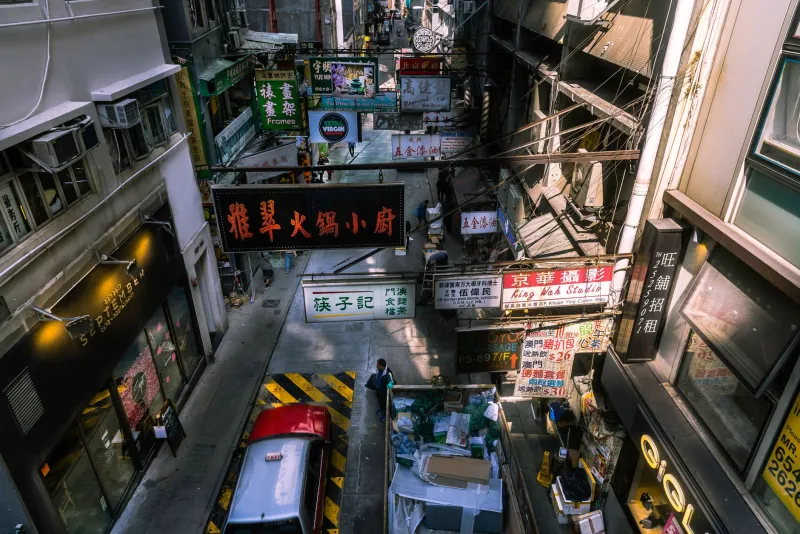
Hong Kong figured this out a long time ago — not because of some minimalist design movement or influencer-driven capsule trend, but out of pure survival instinct. When you live in one of the densest cities on the planet, commute on the MTR during rush hour, and pack for weather that can flip from brutal humidity to typhoon-level downpours inside a single afternoon, your bag game has to be airtight. Literally.
The result is a luggage culture that's part philosophy, part engineering, and honestly? It maps almost perfectly onto how geeks already think.
The Nested System: Think Directories, Not Drawers
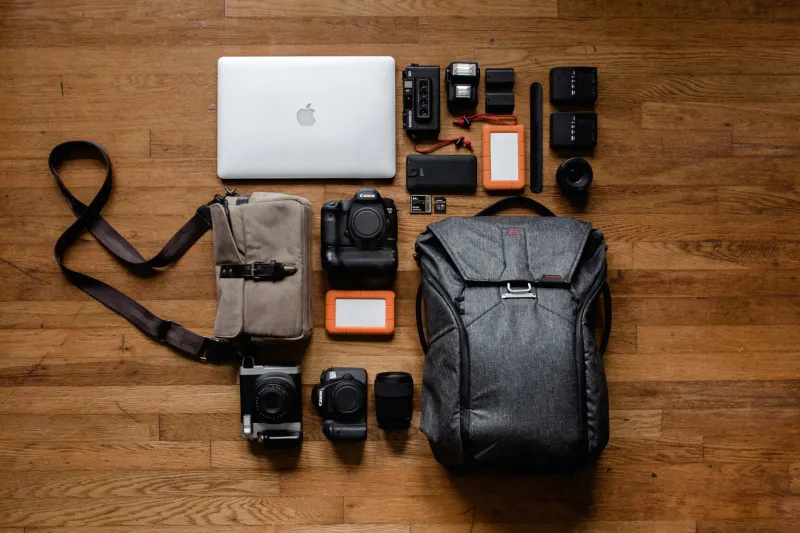
Hong Kong commuters don't just pack a bag. They build a system. The dominant approach is nested modularity — a main bag that acts as the outer shell, fitted with smaller pouches, zip cases, and organizers that each handle a specific category of gear. It's the physical equivalent of a well-organized file directory.
Streetwear labels out of Mong Kok and Sham Shui Po have been building bags around this logic for years. You'll find backpacks with dedicated sleeves for transit cards and phones at the very top — because in a city where you tap in and tap out of the MTR fifty times a day, access speed matters. Below that, a padded laptop bay. Then a mid-zone for cables and adapters, organized in a separate zip pouch so nothing tangles. At the base, a waterproof compartment for anything that can't get wet.
For American geeks, the translation is almost one-to-one. Swap the Octopus card sleeve for your MetroCard or ORCA card. Replace the typhoon-prep waterproof base with a dedicated pouch for your portable battery and USB hub. The logic is identical: every item has a designated slot, and you never dig.
The Messenger Bag Revival (And Why It's Smarter Than You Think)
Backpacks get most of the attention, but Hong Kong's street scene never fully abandoned the messenger bag — and there's a reason for that. In a city where you're constantly moving through crowds, ducking into shops, and pulling out your phone every three minutes, a single-shoulder bag with a quick-release buckle and front-facing pockets is genuinely more functional than swinging a backpack off your shoulders in a packed subway car.
The Hong Kong take on the messenger bag leans heavily into hidden compartments. We're talking false-bottom sections, magnetic closures disguised as decorative flaps, and interior zip pockets positioned specifically so you can reach them without opening the main flap. It's the kind of design detail that looks clean from the outside but rewards the person who actually uses the bag daily.
For geeks in US cities — especially anyone who commutes in New York, Chicago, or Seattle — this is worth paying attention to. A well-designed messenger bag with a dedicated tech organizer inside hits different when you're not wrestling with zippers on a crowded L train.
Expandability as a Feature, Not a Flaw
One of the most underrated aspects of Hong Kong bag culture is the embrace of expandable design. A lot of American bag brands treat expansion panels like a dirty secret — something you unzip only in emergencies. In Hong Kong, it's a core feature, something you expect to use regularly.
The context makes sense. A day in Hong Kong might start with a lean morning commute and end with a haul from a electronics market in Apliu Street, a bag of takeout from a dai pai dong, and whatever random merch you picked up at a pop-up store. Your bag needs to flex with your day, not fight it.
For American geeks, this hits home at conventions, flea markets, and game stores. An expandable backpack that sits slim on your commute but opens up for a convention haul is genuinely useful — not just aesthetically interesting. Brands like Aer and Boundary Supply have started moving in this direction, but Hong Kong labels have been doing it longer, and often with better internal organization built into the expanded configuration.
The Weather-Proofing Mindset
Hong Kong's typhoon season is no joke. Signal 8 storms mean people are still trying to get home while wind and rain turn umbrellas inside out. The response from the bag market has been practical and permanent: weather resistance isn't a premium add-on, it's baseline.
This has pushed Hong Kong street style toward materials like coated nylon, tarpaulin-style fabrics, and welded seam construction on everyday carry bags — not just technical hiking gear. The aesthetic outcome is actually really compelling. These materials photograph well, age interestingly, and carry a kind of utilitarian credibility that pairs naturally with the techwear and tactical streetwear aesthetics that American geek culture has been gravitating toward for the past few years.
If you're building out your everyday carry and you live somewhere with real weather — the Pacific Northwest, the Northeast, basically anywhere that isn't Southern California — taking the Hong Kong approach to water resistance as a baseline expectation is a genuinely smart move.
Building Your Own Hong Kong-Inspired EDC Stack
So how do you actually put this into practice? Start with the hierarchy.
Outer shell: Choose a bag with at least three distinct zones — top-access, mid-body, and base. Weather-resistant exterior preferred.
Tech pouch: A dedicated zip organizer for cables, adapters, and small electronics. This lives in the mid-zone and never moves.
Quick-access layer: Your phone, transit card, lip balm, whatever you reach for constantly goes in the top or front pocket. Nothing else.
Overflow capacity: Either an expandable panel or a secondary tote that folds flat inside the main bag for days when you know you'll be hauling more home than you left with.
The point isn't to carry more. It's to carry smarter — to build a system so intuitive that you stop thinking about your bag entirely and just move through your day. Hong Kong commuters mastered this out of necessity. American geeks can steal the whole framework.
Your bag should work as hard as your tech setup. If it doesn't, you're leaving efficiency on the table.