Hidden in Plain Sight: How Hong Kong's Secret-Detail Street Style Is Turning American Geeks Into the Ultimate Fashion Insiders
There's a moment every seasoned geek knows. You're watching a movie you've seen a dozen times, and suddenly — there it is. A background poster, a license plate number, a line of dialogue that recontextualizes everything. Your brain lights up. You caught something most people walked right past.
Hong Kong's street fashion has been running that same game for years. And once you see it, you genuinely cannot unsee it.
The City That Rewards a Second Look
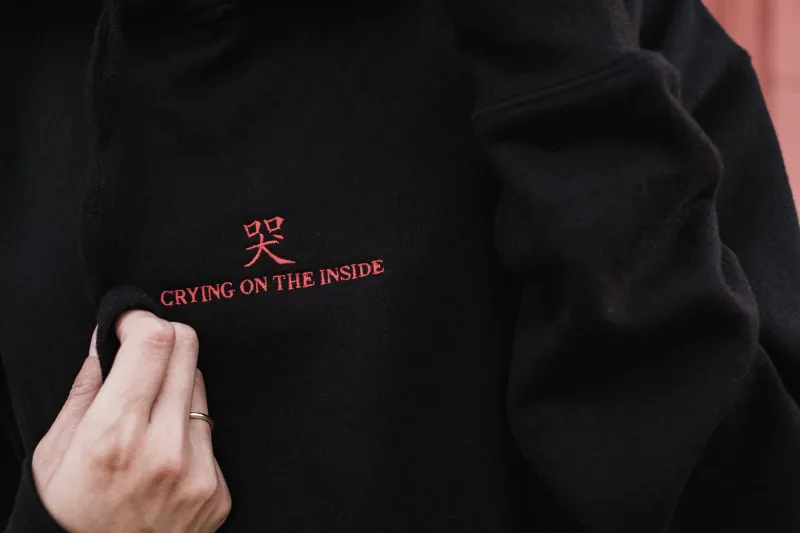
Walk through Causeway Bay or Sham Shui Po and you'll notice something interesting about the way people dress. On the surface, a lot of fits read as clean, even minimal — a dark hoodie, structured trousers, a plain-looking jacket. Nothing that would stop traffic.
But lean in. That hoodie has an interior lining printed with a hand-drawn map of old Kowloon. The jacket's inner pocket is secured with a zipper pull shaped like a mahjong tile. The patch on the sleeve — the one that looks like a generic mountain logo from a distance — is actually a pixel-art recreation of a boss character from a classic RPG.
This is the core design philosophy that's been quietly thriving in Hong Kong's independent fashion scene: build something that functions on two frequencies simultaneously. One for the general public. One for people who know.
Layers as a Love Language
In geek culture, the Easter egg isn't just a fun bonus. It's a signal. It says: the people who made this trusted you to look harder. It's a form of respect encoded into the work itself.
Hong Kong designers — particularly those coming out of the city's dense intersection of manga culture, local nostalgia, and technical craftsmanship — have been applying that same logic to garments for a while now. The result is clothing that operates almost like a text with footnotes. The surface reads fine on its own. But the footnotes are where the real conversation happens.
Concealed embroidery on the underside of a collar. A tonal print that only becomes visible when the fabric catches light at a specific angle. A lining that references a 1980s Hong Kong film poster in a colorway so muted it looks abstract until someone who grew up with that movie sees it and immediately stops you on the street.
For American geeks, this framework is immediately intuitive. You've been reading media this way your whole life. The clothes are just a new format.
Stealth Mode: Dressing Nerdy Without the Announcement
Here's the practical appeal, and it's something a lot of American geeks are genuinely wrestling with right now.
There's a version of geek fashion that broadcasts loudly — the full cosplay at a convention, the head-to-toe branded merch, the graphic tee that names the thing directly. That mode has its place and its community, and nobody's here to knock it.
But there's an increasing appetite for something different. A way to carry your references into spaces where they won't be immediately legible to everyone — a job interview, a first date, a family dinner — while still feeling like yourself. To be, in the parlance of a certain kind of internet culture, deeply online on the outside but seemingly normal.
Hong Kong's layered detail aesthetic solves this almost perfectly. You can wear a jacket with a hidden Evangelion unit number embroidered inside the cuff and walk into any room with complete confidence. Most people see a well-made jacket. The right person sees the unit number and you've just made a friend for life without saying a single word.
It's stealth mode. And it's incredibly effective.
How to Actually Build a Layered Fit
If you're ready to start thinking about your wardrobe the way a game developer thinks about hiding secrets in a level, here are some practical starting points.
Start with the interior. Jacket linings are criminally underused in American streetwear. Look for pieces with printed or embroidered interiors — or, if you're handy, look into custom lining services. A plain bomber with a lining that maps out the entire layout of a fictional game world is doing serious double duty.
Think about scale and distance. A detail that reads as noise from ten feet away but resolves into something specific up close is the sweet spot. Tonal embroidery, small-scale repeat prints, and edge stitching in a contrasting color all operate in this register.
Choose hardware deliberately. Zipper pulls, buttons, and snaps are tiny canvases that almost nobody thinks about. Hong Kong brands have been sourcing or custom-making hardware that carries meaning — a d20 shaped button, a zipper pull that's a miniature version of a character's weapon — for years. US brands are starting to catch on, but the Hong Kong indie scene is still ahead.
Reference without reproducing. The most sophisticated version of this isn't a licensed patch slapped on a sleeve. It's a colorway that echoes a character's palette, or a silhouette that subtly quotes a uniform from a beloved series, or a typeface choice that only fans of a particular game will clock. Allusion, not quotation.
Layer the layers. The real magic happens when multiple details interact. A jacket that references one thing on the outside and a completely different thing on the inside, held together by hardware that connects both — that's not just an outfit. That's a puzzle.
The Community Signal
What makes this more than just a styling exercise is what it does socially. Geek culture has always been about recognition — finding your people through shared references. For a long time, the primary mechanism for that was explicit: wear the shirt, carry the bag, display the pin.
The Hong Kong layered-detail approach adds a new mechanic. Instead of broadcasting, you're filtering. You're not announcing your affiliations to everyone in the room. You're leaving breadcrumbs for the people equipped to follow them.
That shift — from announcement to invitation — changes the whole dynamic. The person who catches your hidden detail didn't just recognize a logo. They were paying attention. They were looking closely. They were, in the most literal sense, reading you.
For American geeks who've spent years feeling like their interests were either invisible or overly visible depending on the context, that's not a small thing. That's a whole new way of being in the world.
The Easter Egg Ethic, Worn
At its core, this is about treating the people around you as capable of depth. Hong Kong's best street designers build hidden details into their work because they believe someone out there will find them. That faith in the audience — that assumption of curiosity and attention — is something geek culture has always shared.
Your wardrobe can run on the same logic. Dress for the room, but leave something in there for the person who looks twice. Build fits that function on multiple levels. Trust that the right people will find what you've hidden.
The Easter egg isn't the point. The point is that you put it there in the first place.