Neither/Both: Why Hong Kong's Hybrid Design DNA Is Building the Geek Fashion Looks American Labels Keep Failing to Copy

There's a food history joke buried in the phrase "chop suey" — a dish invented not in China but in American Chinatowns, a survival remix born from two cultures colliding under pressure. Hong Kong's fashion story runs deeper and stranger than that. It didn't remix out of necessity. It remixed out of identity. And what's come out of that collision over the last few decades is something American streetwear has been trying to reverse-engineer with almost zero success.
For US geeks who've spent years feeling like they exist in the margins between fandoms, subcultures, and aesthetics, Hong Kong's design philosophy lands like a revelation. Because HK doesn't ask you to choose. It never did.
The Geography of the In-Between
Hong Kong's position as a port city, a former British colony, and a gateway to mainland China didn't just shape its politics — it shaped its closets. Tailors in Tsim Sha Tsui were cutting Savile Row-inspired suits with Cantonese construction techniques before most American cities had department stores. The result wasn't a compromise. It was a third thing entirely.
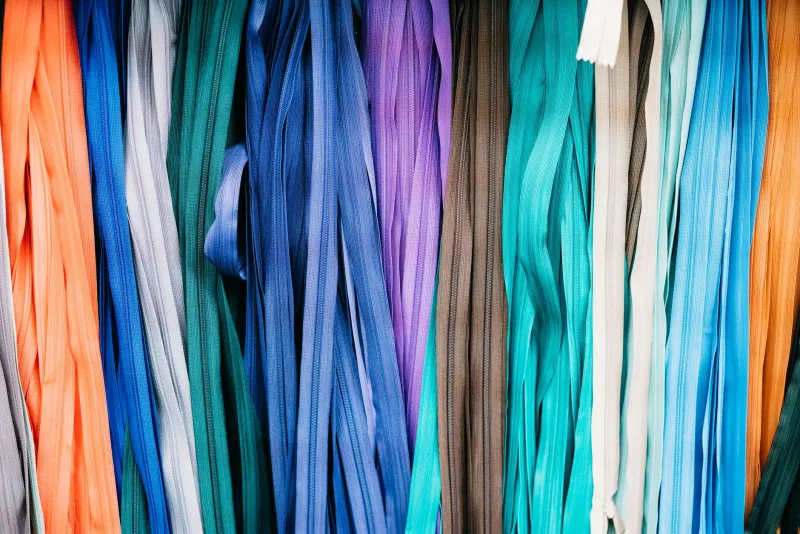
That third-thing energy never left. Walk through Sham Shui Po today and you'll find fabric vendors selling deadstock Japanese selvedge denim next to bolts of silk brocade traditionally used in qipao construction. The customers aren't choosing between them. They're buying both and figuring out what happens when you put them together.
Designers like Vivienne Tam — who built her career on exactly this tension — have been articulating this philosophy for decades. Her "Mao" collection from the mid-'90s layered Communist-era iconography over body-con Western silhouettes and sent American fashion critics into a tailspin trying to categorize it. It wasn't East. It wasn't West. It was Hong Kong.
The Geek Parallel Nobody's Talking About
Here's the thing about geek culture that maps almost perfectly onto this: fandoms have always been hybrid spaces. The kid who loves mecha anime and X-Men comics and builds mechanical keyboards isn't confused — they're operating on a both-and logic that mainstream culture spent decades calling contradictory.
Hong Kong streetwear gets this intuitively. Labels like Clot, co-founded by Edison Chen, built their entire brand identity on it. Clot doesn't choose between sneaker culture and traditional Chinese craft. Their iconic "Silk" Nike Air Force 1 collab wrapped one of the most recognizable Western athletic silhouettes in a material loaded with centuries of Eastern cultural weight. The result wasn't a novelty item. It was a genuine cultural object — and it sold out globally before most American hypebeasts even knew what hit them.
That's not an accident. It's a design philosophy baked into how HK creators think about their work.
Maximalism and Minimalism Sitting in the Same Outfit
One of the specific tensions Hong Kong designers navigate better than almost anyone else is the maximalism/minimalism split. American fashion has historically treated these as opposing camps. You're either a Supreme logo-stack guy or you're wearing Rick Owens monochrome. Pick a lane.
HK streetwear refuses that binary. You'll see fits on the streets of Causeway Bay that combine an incredibly restrained, almost architectural outerwear piece — clean lines, no visible branding, muted colorway — with intensely detailed accessories. A hand-embroidered bag. Layered jade and resin jewelry. Sneakers with a story that takes ten minutes to explain.
The restraint makes the detail pop. The detail justifies the restraint. It's a conversation between two aesthetic languages rather than a monologue in one.
For American geeks, this is basically the fashion equivalent of a well-designed game UI — clean enough to navigate, dense enough to reward people who look closer. And once you start seeing your outfits that way, it's hard to go back to the either/or approach.
Vintage Without the Nostalgia Trap
Another place where Hong Kong's hybrid DNA shows up hard is in its relationship with vintage. American vintage culture tends to be reverential — you're honoring the past, preserving something, cosplaying a decade. There's a museum quality to a lot of US thrift-flip culture that keeps it at arm's length from the present.
HK's approach is more aggressive. Vintage pieces get pulled into contemporary fits not as artifacts but as raw material. A '70s Hong Kong movie promotional tee gets worn under a technical nylon vest. A traditional embroidered jacket gets paired with wide-leg cargo pants and trail runners. The past isn't being preserved — it's being put to work.
This matters for geek fashion specifically because so much of geek style is already in conversation with the past — retro gaming graphics, vintage anime aesthetics, old-school sci-fi references. Hong Kong's framework gives you permission to use that material without being trapped by it. You can love the reference and still make something new.
Why American Brands Keep Getting It Wrong
So why can't US labels just copy this? They've tried. You've seen the "East-meets-West" capsule collections drop every few seasons from major American streetwear brands. They almost always land flat.
The problem is that hybrid aesthetics born from lived cultural experience can't be recreated through mood board research. When an American brand slaps a dragon graphic on a hoodie or adds a mandarin collar to a bomber jacket, it reads as a costume because it is a costume — a surface-level approximation of a depth that took generations to develop.
Hong Kong designers aren't making aesthetic choices about Eastern and Western elements. They're expressing something that's genuinely both, because they are both. The clothes carry that authenticity in ways that styling decisions alone can't manufacture.
For US geeks paying attention, this is actually a useful lesson about personal style: the most interesting fits come from genuinely held contradictions, not performed ones. Your love of vintage sci-fi paperback covers and contemporary Japanese workwear isn't a conflict to resolve. It's a design language waiting to be developed.
How to Bring This Home
You don't need to fly to Causeway Bay to start thinking this way (though honestly, if you get the chance, the shopping alone is worth it). The HK hybrid philosophy is more of a mindset shift than a shopping list.
Start by identifying your own aesthetic contradictions — the things you love that "shouldn't" go together. Then treat those tensions as the starting point rather than the problem. Look at how HK labels like Descendant of Thieves, Izzue, or even the more accessible end of the G.O.D. lifestyle brand navigate similar splits. Notice how they let materials and construction quality do the heavy lifting rather than relying on loud branding to signal the cultural reference.
Mostly, stop asking yourself which camp you belong to. Hong Kong figured out a long time ago that the most interesting territory isn't in either camp. It's in the space between them, where everything gets complicated and nothing quite fits a label.
Which, honestly, sounds a lot like where most of us have been living all along.